Showing posts with label Debacle. Show all posts

Thursday, March 24, 2011


Everything Is Under "Control"

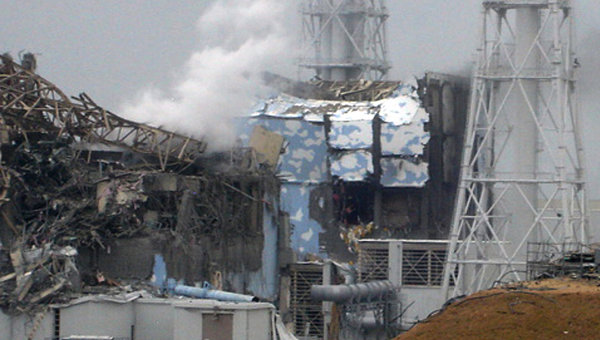
So glad to know that everything is just fine at the Fukushima nuclear reactors, and that I was being a damned fool to go out and get things that block the uptake of radioactive iodine-131, bind with caesium-137 and -134, and to tally the beeps from my Geiger counter keychain. And the 130 gallons of drinking water, the portable garage, the Mac-10, the inflatable roadblock, etc? All unnecessary frivolities of a paranoiac.

So far, so good, just a few extra x-rays for the people in the Pacific Northwest, which the media tells me is actually *great* for your health! Such a relief to know that a bunch of fate-tempting dipshits in engineer suits aren't poisoning my children from halfway around the world, but that they're actually helping them!

Tuesday, February 01, 2011


Why Israel May Abandon Zionism
"We will not be silenced! Whether you're a Christian, whether you're a Muslim, whether you're an atheist, you will demand your goddamn rights, and we will have our rights, one way or the other! We will never be silenced!"
Cairo Protester, January 25th, 2011
Last Wednesday Lord Wife and I went to meet an Israeli dissident for an evening. His name is Hassaf and we know him from our kids' co-op school. The school's annual auction was our reason for being there, having bid on and won "Understanding the Palestine-Israel Conflict." Because a couple of other co-op school parents were there, both of whom had traveled across the region in their youth, in addition to two local peace-active scholars, the main focus of dialogue was the region's history of conflict following Israel's formation.

Hassaf is a deeply thoughtful, fair-minded, and forthcoming man who decided to leave his country rather than run afoul of the Shin Bet (the secret police), so I did my best to shut up and learn something while the others questioned and commented. I failed the first objective and said far more than I intended, but it was hard not to succeed on the second, since Hassaf is the perfect perch on which to have one's thoughts provoked.
The elephant in the room, the current tsunami of pan-Arabic civil and economic unrest, waited patiently in the wings, its trunk peeking out occasionally.

Obviously what's going on in Tunisia, Egypt, Jordan and soon to be Syria and Saudi Arabia is huge from Israel's perspective, because it spells d-o-o-m. (Note: a handy Barometer of Badness for the tsunami's strength is the price of oil, which has already crested $100/bbl.) To me, of course, what's happening is expected. The equation is child's play. You take Western client states with decades of stability achieved through brutal repression, a strong and largely homogeneous religion, a young unemployed demographic, then you add rampant inflation in food commodities and top it off with a wheat crop failure in Russia. Take away bread and sugar and this is what you get. Really, what else could you expect?

What's not child's play is the immediate and long-term effects on Israel, aka "US interests in the region." That's what I was brooding on last Wednesday night. It's had time to percolate and its coming out right now despite it being in the middle of my workday, perhaps because we'll be meeting with Hassaf again this Wednesday night. A lot of commentary or causation could be laid out here. But there's no time so here's the deal. Every single day that Mubarak, Egypt's military dictator for the past 30 years, stays on is bad for everybody. Every day he stays, support for the Muslim Brotherhood swells.

Mubarak must be convinced to step down at once, with safe haven assured for his family and the metric tons of gold they got out last week. The longer he attempts to stay, the higher anti-Israel sentiment of succeeding governments will be, as well as its cohesion and duration across them as a group. It's already too late, but fast action in Egypt and ginger diplomacy with the replacement(s) would ameliorate the effects of a possible, and probably a likely, near-term oil shock. Two words nobody in our media is mentioning: Oil Shock. The Happy Chatter I've heard most out of the twittering heads is about democracy breaking out in the Mid-East. Democracy in the Mid-East? Give me a fucking break! Democracy in the Mid-East is about as useful as a refrigerator of ping-pong balls. Nitroglycerin-filled ping-pong balls.

[ed. note: Some very smart analysts see voting democracies as a positive way forward. Whereas I see them as quick paths to majority rule by Islamists. My opinion is formed by having seen my own government taken over by religious radicals, ones who still effectively set its policies, and by having been a young eyewitness to the formation of their plans.]

The Obama Administration is, unfortunately, too locked into its own foreign policy ass and damage control processes to accomplish anything like fast, effective action. Therefore, Israel will find itself in a truly interesting position: having aggressively settled the hell out of Palestine and boxed its bothersome inhabitants into a tiny fraction of the available land mass, generating pan-Arabic enmity, it can now turn around and make concessions, very soothing concessions. Such as would provide the next Western client state successors, such as probably El Baradei in Egypt and the bin Laden family in Saudi Arabia with quick victories and credibility. This means stabbing its own Zionists from the front, and from the back or the side will do just as well. If it can stab them down, Israel can reestablish a semblance of stability.

I see that opening, at least, and will allow myself a wallow or two in my own optimism, even for at least one more sentence. Implementing concessions may not deflect all the existential problems coming for Israel, not least its own neuroses and habits, but giving up its Zionist political strategy (adopted in order to generate immigration) buys more time. More time is a good thing, right? (Wow. That wallow felt really nice.) One must admittedly recognize the solution verges on the politically insufferable, and if so that's too damned bad. Again, the equation is pretty easy here. Over time, a reunified pan-Arabia defeats Israel via mere copulation, and there are already just too many Arabs to kill. The biogenetic weapons Israel has tried to come up with, ones which could selectively attack only Arab populations and spare Jews, haven't materialized. Trouble is, Arabs are every bit as Semitic as ancestral Jews, much moreso than European Jews, having all come from father Abraham.

Pacifying the anger is now a far more fruitful course, since the opposite tack manifestly failed as of Sunday, January 30th, 2011. Now, as a gloomer and doomer, it would be remiss of me to not repeat that it's probably too late. Many things have changed, human nature isn't among them. Peoples do change when they've exhausted other options. Well they're exhausted, baby, and leadership's inattention to and denial of bad fundamentals on the ground went on far too long. It's out of control now and no known countervailing force exists which can contain the Mid-East's grievances. Except maybe, just maybe making a half million or so hostile, entitled, crazy-ass-racist religious radicals move out of settlements built with US foreign aid. Oh and until that happens, as an aside, anyone reading this would be well advised to go buy at least 50 gallons of gasoline...and browse Craigslist for a moped.

Friday, November 05, 2010


Does the Republic Still Stand? Hmmm...

It's a good question, especially for me, since on Tuesday night I learned from Lord Wife that there was an election or something, which she construed as some kind of disaster having to do with Republicans and corporate carpet-baggers. To which I said, "Wait, the Republicans won?? That's fantastic! Now Baby Hugo will get his concealed carry permit and we can send him to day care with the 38 Special. It's about damned ti---"

Next thing I knew, a dream was fading away, one in which I was discussing speech impediments with a young, nubile Barbara Walters; she had been explaining to me in delightful detail how she finally conquered the letter R. Gradually, Lord Wife's concerned face began to come into focus out of a gauzy, LED-like haze. She was holding a sturdy Calphalon pot by its handle, looking down at me lying on the kitchen floor and screaming, "No, no, go back! Go towards the light, you mental pygmy! TOWARDS the light!" Don't get me wrong, women's suffrage was a wonderful thing, as was the Great Depression which soon followed, not to mention...well I'll just let it go at that and start humming "We Shall Overcome."

The Pugs may sell us down the Cuyahoga slightly faster than the Dims. Or not. All I can tell, there's a tremendous puckering tension in this country between people who want to make it better via government and those convinced that will make it worse. Government? What government?? With all due respect, sir, I see no government here. What I've been paying my spare attention to makes elections, schmelections look like the pathetic little speed bumps they've installed around my neighborhood to try and get me to slow down (I know it was you who complained Louie, don't even try to deny it), and which I continue to proceed over at a sporty 45 mph. Now, if it were the basis of a Reality TV show, the object of my attention might well be titled "When Icebergs Attack" and might even intro with unintelligible gibberish such as this:
To provide operational flexibility and to ensure that it is able to purchase the most attractive securities on a relative-value basis, the Desk is temporarily relaxing the 35 percent per-issue limit on SOMA holdings under which it has been operating. However, SOMA holdings of an individual security will be allowed to rise above the 35 percent threshold only in modest increments.
Whuuh? Didn't understand that? You're lucky. Because chances are pretty good you won't be hunted down, tied to a stake, and burned by an angry mob in, oh, about 2 years give or take. The important take-aways from the bankerly blather above, issued after Wednesday's Federal Open Market Committee meeting, are:

1) yes, they are actually calling government debt instruments by the name of a sacred ritual drink from the Indo-Iranian Rigvedas.

2) even better, Soma was the drug Aldous Huxley wrote about in Brave New World, his futurist vision of what happens when the Federal Reserve enslaves everything, passes out the SOMA like farmers grow corn syrup and make everybody high as fucking kites until they must be killed for the good of society, i.e., before they have to be paid any of their promised Social Security benefits.

3) the post-modern English translation of the SOMA pronouncement is, "All rules are out the window now, we're just making this up as we go along anyway. What we ARE going to do is monetize the US government debt right in front of your face while mumbling incantations not even we understand anymore, only we're going to do it a lot faster than before, wearing our most reassuring suits and smiles. Resistance? Hahahahaaa! You'll beg us for quick death. Now drink your SOMA and get back to hallucinating, you mental pygmies!"

4) SOMA stands for System Open Market Account holdings, or what debt the Fed has amassed. It's over $2.xtrill now, and with yesterday's announcement we can expect it to grow another $1.xtrill by early next year. The Fed is about to pass China as the single largest holder of Treasury bonds, and I fully admit that "1.xtrill" is not even a real number. Which is exactly my point. Total yearly global GDP is said to be @$55.xtrill, not including the Vatican, so whatever the Fed is planning on spinning out of its fiscal/monetary rabbit vortex-hat next, it'll be LARGE.

There's a lot more of this obfuscatory exercise in concentration camp euphemism than just two sentences, there are reams. Reams and reams, with a whole lot of reaming going on. A curious person might ask: how long, realistically, can the Triad keep getting away with this? The Fed gives 0% loans to banks, the banks buy stocks to keep the stock market trending up, they buy Treasuries half-heartedly and pocket a 2.7% difference above their 0% loans, obviating the need to actually lend. By continuing to service each other's yields on Magic-Backed Securities (MBS), the international banking system (IBS) often exudes a curiously life-like appearance of continuing to function (CTF).

When it fails to function, starts puking and drooling and its diaper overflows, the Fed buys whatever Treasuries and unwanted mortgage-ish bonds don't sell, loans money to Iceland so it can buy ads for sex tourist campaigns, then J.P. Morgan's secretly embalmed Hand of Glory is waved and it's pronounced "stimulus." This is why I'm constructing a hidden bunker in my basement, or more accurately, underneath my neighbor's house.

For more able, stable bloggers than I get into decoding stuff like Reverse Repo Counterparties, Settled Holdings, Maiden Lane Transactions (tell me more, baby) and explain why negative Treasury yields (don't ask) are now occurring. My global finance learning-perch was street-side at The Curb, so the vividly profane, mayonnaise-stained trading language of my tutelage springs effortlessly to mind. One might call that learning experience many things, but boring isn't one. You'd hear the following sort of thing there on an hourly basis:
Intro, scene, Fed metaphor: you're minding your own business, going to a neighborhood farmer's market. On the other side of the street you see they're throwing a big party in the parking lot; the mayor, city council, and chamber of commerce sit on a raised podium, all roaring off-their-asses drunk. The lot is cordoned by cops in riot gear, ringing the banners, confetti, cheerleaders and high school band. A banner in front of the podium reads The American Way of Life; under it a bunch of men are dancing. Something looks odd about the dancing from a distance, and as you draw nearer, a gap in the crowd opens and you realize the performers are from the insane asylum and they're doing a giant circle jerk. They're jumping in rhythm and howling "Stim! You! Late! Stim! You! Late!"
I could relate other financial metaphors, but they're too dirty. In the annals of sovereign finance, what these dubious, dogmatic currency assassins are doing is Feast of the Mau-Maus bad. Hieronymus Bosch painting bad. Aleister Crowley summoning Satan to eat a May Queen's soul bad. It's ghastlier, grislier, and on a far grander scale than any swindle that's ever been run. At least the Tulip Craze was just about flowers. The South Sea Bubble took down two kingdoms, and that was just over a few far-off islands that wiped out some speculators who were already rich.

What we have on our hands now is about the homes we live in and the land underneath. The banks claimed ownership of them, leveraged their values by two orders of magnitude, then couldn't pay their investors off. Meanwhile, the speculators aren't being wiped out, they're the ones being given free money. To a simpleton clouded by news cycles, illicit substances and fiat currencies, this means everything's going to be just fine and I'm a raving lunatic. Which reminds me, we're going to need a second 12-gauge shotgun to back up the electric fence.

Orwell feared nations that banned books, Huxley feared a society in which nobody wanted to read them, and it looks like we're going to get the worst of both. Books or no, you catch on that Empires can get away with a lot because, well, they're frigging Empires. So in that context you could reasonably answer the little question posed above with "Quite a while." In following posts I'll lay out some consequences of monetizing debt, explain why Goldman Sachs is about to eat the Fed's lunch (meaning ours) and in all probability will rebut myself. Pun intended.

Tuesday, September 29, 2009


"If The Democrats Can Grow A Backbone..."

Jon used that phrase in the comments section of the last post, and yes, I am taking him waaay out of context, but it prompted me to think of the gelatinous mass above. Welcome to my mental image of the Democratic Party. There are still a few useful parts...I think the fang hanging on the right side of its mouth is Russ Feingold, the vestigial flippers are Kucinich and Leahy, Waxman is maybe the nose.

Update: Why yes, failure is their preferred option: Senate panel rejects gov't-run insurance plan

Monday, March 23, 2009


All Your Base Are Belong To Us

Game over. Today's Financial Times:
"China's central bank on Monday proposed replacing the US dollar as the international reserve currency with a new global system controlled by the International Monetary Fund."
The Nasdaq and Dow went up by 7% today, despite China making this official statement. Because David Axelrod (Obama's Karl Rove) lost a battle over the bank plan to Tim Geithner, who just told his friends that Cash for Trash was in, there will be no repercussions and no limits on executive compensation. I can honestly tell you that people are partying on Church Street tonight buying some 50 dollar teenies and inhaling some 80s snuff.

There's a Chinese saying: to enslave someone, indebt them. The Fed is going to have to keep buying it's own Treasury Bonds, sure, I know the Fed isn't part of the govmint, right, and that's not change we can believe in. If you are fortunate enough to have some money in a bank, get it out. Tomorrow. Buy power tools, generators, a few thousand pills of Xanax, and enough booze to keep a bar open for a few months. Hell, buy a still. You can sell it all later on Craig's List after the dollar has inflated by 1,000% because while the bankers party they're too stupid to have known what the message said:
君達の基地は, 全てCATSがいただいた. 君達の艦も, そろそろ終わりだろう
Translation from the Chinese: "If you inflate your bonds, and you are, there is no longer any reason for us to hold them. Since the Fed is buying its own bonds maybe it won't mind buying ours back, too."

Translation from the Japanese Sega Game: "With the help of Federation Government forces, CATS has taken all of your bases. Your ship is about to meet its doom also."

Wednesday, February 04, 2009


From The Comments Section "Of Coal Mines & Canaries"

Still Life Living, who wrote the original post, observed:
It is interesting how we Americans recently poured $140 billion into Citibank ($50 billion cash and the rest thru off-balance sheet Fed incentives, loans, and cash infusions), and the market cap today is only $19.35 billion!

God bless America. Where else could such a ruse be pulled off? Why didn't the US just buy all of the outstanding shares at market prices and go forward with a truth commission like investigation? Once we own the company, we own the history. Then we can prosecute and maybe seize assets and get our money back.

Halliburton has a market cap of $16.4 billion. I think the USA should buy it so we can own the history and start prosecutions.
Where did that 150 billion go? At this point, no one knows, but that's a shit-load of money, 7 or 8 times the total worth. Far cheaper to buy their ass, buy all their assets. And what are they building in there, between 10-K reporting deadlines? I don't know, but Tom Waits and I will tell you one thing: they're not building swing-sets for the children. It would be much cheaper to buy the truth than to keep paying off our captors.

Monday, December 22, 2008


Anti Claus: Cheney's Highest Moment In Office

By his own account, was 9/11:

WALLACE: Highest moment the last eight years?

CHENEY: Hmmm. Highest moment in the last eight years. Well, I think the most important, the most compelling, was 9/11 itself, and what that entailed, what we had to deal with. The way in which that changed the nation, and set the agenda for what we had to deal with as an administration.

WALLACE: And I assume that was also you're lowest moment.

CHENEY: Yeah...sure.

Bodies and their shadows often concur, but the wreckage of our skies confirm separations. Dick Cheney was in the Presidential Emergency Operations Center (PEOC) with his wife Lynne on that morning, before Secretary of Transportation Norm Mineta arrived. Mineta gave the only sworn eyewitness testimony regarding Cheney's activities during the terrorist operations:
No, I was not [aware that shoot-down orders had been given]. I was made aware of it during the time of the airplane coming into the Pentagon. There was a young man who would come in and say to the Vice President, "The plane is 50 miles out...the plane is 30 miles out..." And when it got down to, uh, the plane is 10 miles out, the young man also said to the Vice President, "Do the orders still stand," and the Vice President turned, whipped his neck around and said, "Of course the orders still stand! Have you heard anything to the contrary?"
Orders? What orders? Presumably, they pertained to either shooting down the incoming planes or not. Subsequently, despite being integral to the timeline and tragedy, the implications of Mineta's testimony were strenuously avoided; there are no records of shoot-down orders or otherwise. They were suffocated in the bassinet of bureaucracy, yet Cheney regards 9/11 and what followed as his best time in office. And if I were in the White House bunker on that day, in command and responsible for the deaths of Americans no matter what I decided, it would not roll it off the top of my head as a "highest moment."

And what about the "young man?" How was he keeping Vice President Cheney minuted? He must have been scurrying back from the FAA-integrated Secret Service operations screens in the PEOC bunker. The Secret Service was monitoring the hijacked flights during Global Guardian, a yearly threat-response exercise, and its 2001 airborne subset Vigilant Guardian, a live-fly wargame focused on inter-agency response to hijacked commercial airliners (disputed by answers to the 9/11 Commission, but previously center-pieced in an Air Force powerpoint presentation, Amalgam Virgo 01). By FAA procedure, a passenger jet which turns off its transponder immediately appears on military radar as a potential threat. Any commercial flight which did so that morning would have looked like an additional bogey to the military.

The notion that 19 non-pilots evaded the defenses of the most sophisticated airspace in the world for two hours begs credulity, as does lack of forensic evidence and transparency.
This is partially mitigated by the report that five of the hijackers received training at US military bases in the 1990s (source MSNBC/Newsweek article). At least some of them could fly. But they chose the day from caves in Afghanistan when the US Air Force was conducting an anti-hijack exercise which involved every major security entity in North America (read the powerpoint)? That strains credulity into a double-hernia.

I want my suspicions and all my body's senses (for I drove by the twin towers at 8:31 on 9/11, was there for its aftermath, and my former boss and co-workers died for having breakfast in Windows on the World) to be wrong, wrong, wrong. I and 70% of my fellow New Yorkers are biased. If you can downplay or disagree, please send us contravening facts to set our minds at ease. We are all passengers in this car, and like the EPA says, your reality may differ.

The media provoked this post by the offence of giving air-time to a non-convicted architect of horrors, which none likely to come here would dispute. Bush and Cheney ordered programs of torture based on nothing more Constitutional than a Berkeley lawyer's opinion (known as "Dr. Yes" in the White House). My point is about burdens of evidence, that they're not on you or me but on a government which failed to provide them. Then stonewalls. Then gives interviews, and gloats.

If you find footage of a plane flying into the Pentagon, one of the buildings with the highest monitoring of closed-circuit TV cameras in the world, you'll be my Santa Claus. Google away. Meanwhile, evidence was provided by a most credible witness in congressional testimony about a man's decision-making on that morning which killed Americans. We don't know what decision was made, but incinerations and all the sins which followed from it are broadcast as the highest moment. May he never have another.

Tuesday, November 25, 2008


Where Would You Want To Be Homeless?

It would be right across the street from Lord Running Boy's co-op school, and that's where the Nickelsville, named for Seattle's smooth-jazz mayor Greg Nickels, moved to a month or so back. The church which rents out space to the school turned over its profitable pay-parking lot to homeless activists in a perceived emergency. We parents weren't consulted, and some furies ensued. A part of our children's tuition now goes to feed them, in addition to the usual food bank crowd. The teachers are all about anti-fascism and anti-bias, so that first week they naturally took the kids over on a conga line to meet the pastel pink and blue tent-residers in the parking lot. Lord Running Boy's recorded quote: "They're not aliens!"Link

Many parents were tousled, tempests brewed in teapots, a homeless person was hit by a mini-van, and we expressed our support for the actions of the church and the school. It's not over by a long shot, the legal tussles between the church, city, tent-dwellers and parents might be going on for years. We'll have to deal with more of this, I said, so doctor my eyes, and tell me what you see. I hope you administer humanely. We're thankful our bias-free boy has met the homeless, for they might be us, we might be them, and hope they're not us. Awhile back I drafted a still-born post about it called Depression 2.0, but Still Life Living cooked a better, unflinchingly honest and more current post about what's up:
I regularly talk with my colleagues in a rational manner about what happens if the bailouts fail, where I want to be homeless. Then I point out all the people who are on the front line of our current wave of the melt down.

One wacky friend of mine has made the conscious decision to live out of his car.

Another friend has a University of Chicago MBA who owns his own small business and employs 15 people. He is diligently trying to rescue his business. Mail order sales of plants are off by 90%, but he can't draw on his good credit and he doesn't qualify for a bailout. So some of those families who depend on him will probably end up moving in with relatives or be forced to brainstorm.

As for me, I work in the glass towers of Los Angeles. And it is happening here too. My son’s friend’s father just lost his fancy job at a national law firm because the work is slowing. He is safe until December when he loses his alimony from the guild -- at which point he, his wife, and three kids have to scramble to land a $150,000+ per year job. It is getting harder even for the well educated to get jobs, at least jobs that pay enough to cover the mortgage, insurance, car, and food. With the slowdown, the experts say those good jobs will come back, but it may take three or four years. There is, of course, the chance unless they might be outsourced altogether, in which case they are never coming back. But my son's friend's parents and siblings will be okay, they have family back east.

An artist friend is designing very beautiful, colorful signs saying "Will Work 4 Food". She is betting that people will want to distinguish themselves from the increased competition. I really liked her art-nouveau one. They are really cool. I bought it to give as a christmas present to my friend who is sleeping in his car, but I have reconsidered and will probably just keep it myself. I mean it is really cool.

My company is filled with professional financial analysts and professional economists. No one is talking about the meltdown beyond the superficial, so either they don’t think it is a big thing, or it is too big for them to get their heads around.

The best person I have to talk about this with is my 8-year-old daughter. She has a Kit Kittridge American Girl Doll from 1934. My daughter loved the movie. She has seen a Hollywood-version of a Hoover Camp. She sees the homeless people around, and she can see them as real people because of that movie. She understands that if this magic thing called society contracts, we may be forced to think outside the box and eat in communal soup kitchens. I mean in a worst-case scenario. I don't think she thinks it could ever happen, and I hope she is right.

Nevertheless, I think we should downshift for a depression, grow our own gardens, car pool, eat less and more healthily (saves on doctors visits) — but at the same time work like hell to take democratic control of our shareholder responsibilities in society. I mean, if we are really good, maybe Halliburton will come solve this mess for us. Not in my American Dream. I’m going to have to do it, hopefully with you.

Strange story: a business that is struggling and has not done anything wrong can't get help, but the greedy trip over themselves to get a handout. Today in the WSJ, I see that insurance companies are buying banks so they can get bailed out. I didn't realize how much more surreal it could get than George W Bush, war president.

I take snap-shots of the children, dancing in a parking lot that's filled with tents of light. I yell at them to be careful, but I see nothing in front of me, nothing to the sides, nothing behind, and the old king is dead. Long live the king. A wild and rainy wind is blowing, and I'm not going to judge your cigarettes, the smells, or the drugs. Come on, tell me your stories, show me your scars, and return my son's hellos.

Friday, October 10, 2008


National 'Punch Out A Bank CEO Day': More Rays Of Hope

An unnamed Lehman Brothers employee punched Dick Fuld, reptile-CEO of the failed Lehman Bros. investment bank, in the face while he was working out in the employee gym. Thereby knocking him unconscious. Fuld, better known as the guy who went in front of Congress after getting $60 million in bonuses this year to whine, "Mmmwhere's my bailout??"

Via the Telegraph UK:

Mr Fuld, who has been testifying on the financial crisis before the US House Oversight Committee, was attacked on a Sunday shortly after it was announced that the banking giant was bankrupt.

Following rumours that the incident had occurred, Vicki Ward, a US journalist, said "two very senior sources - one incredibly senior source" had confirmed it to her. "He went to the gym after ... Lehman was announced as going under," she told CNBC. "He was on a treadmill with a heart monitor on. Someone was in the corner, pumping iron and he walked over and he knocked him out cold.

"And frankly after having watched [Mr Fuld's testimony to the committee], I'd have done the same too."

"I thought he was shameless ... I thought it was appalling. He blamed everyone ... He blamed everybody but himself."

Could this be the beginning of a trend? Pretty much anyone in the country could make a compelling self-defense case. (The complex of buildings above the title is a pic of Fuld's modest dwelling.)

Sunday, October 05, 2008


Not Just $700 Billion--It's $2.7 Trillion & Counting

In the haze left by financial chicanery, no one bothered to total up the damage and report it. Until a blogger did so. Here's his take:

WaMu goes down!! Wall Street vs. Your Street.

By Reconstitution 2.0

[excerpts]
"$1.964 TRILLION of liquidity that has already been pumped into the system, so why would anyone think another $700 billion will make any difference in making lenders lend again?? The short answer is: It won’t!!

the problem is not liquidity, the problem is trust. If the problem were liquidity, all of the money the FED and Treasury have pumped into the markets over the past six months would have been sufficient to cure any problems. Let’s look at the list [for the past 6 months]:

Bear Stearns takeover and fold into JP Morgan. Cost to FED = $29 billion.

28 Day Term Auction Facility. Cost to FED = $100 billion.

28 Day Term Repurchase Agreements. Cost to FED = $150 billion.

28 Day Term Securities Lending Facility. Cost to FED = $200 billion.

Overnight Primary Dealer Credit Facility. Cost to FED = $262 billion.

28 Day TSLF Option Auctions. Cost to FED = $50 billion.

84 Day Term Auction Facility. Cost to FED = $25 billion.

Federal Housing Finance Agency (Fannie/Freddie nationalization). Cost to Treasury = $500 billion.

AIG nationalization. Cost to FED = $85 billion.

MBS purchases. Cost to Treasury = $200 billion.

Swap line with European Central Bank. Cost to FED = $120 billion.

Swap line with Swiss Central Bank. Cost to FED = $30 billion.

Swap line with Bank of Japan. Cost to FED = $60 billion.

Swap line with Bank of England. Cost to FED = $40 billion.

Swap line with Bank of Canada. Cost to FED = $10 billion.

Asset Backed Commercial Paper Money Market Liquidity Facility. Cost to FED = $73 billion.

Conversion of Goldman Sachs and Morgan Stanley to banks. Cost to FED = unknown.

Swap line with Reserve Bank of Australia. Cost to FED = $10 billion.

Swap line with Sveriges Riksbank (Central Bank of Sweeden). Cost to FED = $10 billion.

Swap line with Danmarks Nationalbank (Central Bank of Denmark). Cost to FED = $5 billion.

Swap line with Norges Bank (Central Bank of Norway). Cost to FED = $5 billion.

—————————-

...the Paulson outline is doomed to failure because it does nothing to add transparency or clarify the true value of any “product”. What needs to happen is every MBS and CDO must be pulled apart, each individual mortgage evaluated to determine if the account is current or in default, then regrouped and re-rated properly. But that is a lot of work and Paulson’s bunch of Wall Street “consultants” will never do it."
(passed on by Bruce at the River Blog.)

Thursday, October 02, 2008


On Bailing Oceans

I had a great teacher who used to say, "Maybe the way to the answer is to ask a good question." Here's a good question: If you were the CEO of a failed bank and the government gave you, let's think small, $50 billion in exchange for the worst trash on your balance sheet, what would you do with the money?

You're probably more altruistic than me. But as that CEO, I would haul ass to buy gold, ships full of grain, things that come in 55-gallon drums, Swiss francs, platinum, memberships in a Dubai golf course, toilet paper futures, a couple of chocolate plantations, copper wire, Filipino pot farms, and maybe some stock in Campbell's Soup (the only publicly traded stock which went up on Monday). I would not, not, not lend it to US consumers who don't have rock-solid credit.

First, in my CEO hat, I see Toyota's sales just fell by 30%, that venerable domestic carmakers were awarded huge government loans to avoid bankruptcy, and my own credit card portfolio looks like it'll need a rescue of its own. Second, I'd guess the country's going to be tapped out for a while and experience something between the 1987 stock market crash and Hooverville. Third, and most importantly, every other banker thinks like me. I know there will be a frenzied stampede to quality--the safe, boring investments which hold value will be snapped up, and if I move faster than my competitors do, I'll make a lot of money in the next asset bubble. If it means buying bordellos in Bangkok rather than making car loans to marginal US workers so they can show up at their jobs, too bad. I'll list the bordellos as resorts on the balance sheet and my investors will be happy.

Hey, there's no law yet against answering your own question, especially when it describes what's going to happen. The Senate just voted 74-25 to approve a bailout plan that's not going to work, and the House is expected to approve 450 pages of "Do Something." The plan pays face value, face value, for completely unregulated, illiquid, esoteric derivative instruments with leprosy. This is pure largesse, and bankers will take most of the bailout capital straight out of the country on amazingly nimble little sheep-legs, moving so fast that they blur. We can skip over the financial panics which took down Rome, France during the South Sea Bubble, Weimar Germany as a global domino in 1931, and the failure of Japan's long bail-out from 1987 until now. But some contextual blame-storming is in order.

So...who or what is to blame, and why won't the bill work? More than any single person, Milton Friedman is to blame, and his popular ideas are responsible for the confusions most impeding a solution. Friedman was (he's dead) the most respected worldly philosopher of US economics, and his Chicago School ideas formed current perceptions of how markets work. 25 years ago, his views on deregulation, markets, and shock therapy had become orthodoxy at the IMF, the World Bank, Wall Street, and in the halls of government. Few people are aware of how tolerant he was of monetary expansion, and fewer still are conversant with the trails of hyperinflation and crisis he left across the world (masterfully chronicled in Naomi Klein's magnum opus, "The Shock Doctrine").

Things resembling this same bill have been passed before in other countries over the barrel of crisis, and despite ample forensic evidence left at the crime scenes, hardly any people in the halls of power question Friedman's dogmas, let alone realize how dangerously, dunder-headedly wrong his doodle-bops have proven in both theory and practice. Even during these opening stages of our intestinal disturbance, the language used to describe it remains almost entirely his. We're agonizing on the toilet, alternating between vomit and dysentery, and his prescription is Ex-Lax. Simply put, Friedmania is a contorted, neo-colonial, cleverly self-rationalized excuse for looting governments and ridding societies of safety nets, pledging trusts in large organizations and moral hazards so atrocious Adam Smith would have pissed out a thousand posthumous pages on them. But for us, these precepts mark our policy compass.

Ben Bernanke, current Federal Reserve Chairman, is a prominent Friedman acolyte lauded for expertise on the history and causes of the Great Depression. In short, they don't think the Fed intervened aggressively enough in the financial crisis following the Crash of '29. At Milton Friedman's 90th birthday celebration in 2002, Bernanke remarked:
"Let me end my talk by abusing slightly my status as an official representative of the Federal Reserve System. I would like to say to Milton and Anna: regarding the Great Depression. You're right, we did it. We're very sorry. But thanks to you, we won't do it again."
What he meant was that massive monetary expansion was the balm, and the Fed could have inflated its way back into macroeconomic prosperity. Shockingly, however, Friedman and Bernanke are completely wrong about the Fed's intervention efforts and the Depression. Their position is difficult to reconcile with facts (of which they surely can't be ignorant) and anyone with a passing interest will find that the Fed printed scads of money and repeatedly beseeched banks to start loaning it out in order to reverse the accelerating deflation trend. Yet despite access to capital, credit tightened and lenders kept foreclosing on mortgages and businesses, preferring to retreat into safe havens, abetted by government stimulus. I call this phenomenon the "What Bankers Do When They're Scared Shitless" theory of economics.

Approximately 40% of US banks failed back then, and small depositors were the first to lose their money. Now, the depositors are insured, but the world is plunging into financial vapor-lock. The Chicago School sees it as an opportunity. Back in the 1930s, after various stimulation packages, government work schemes, and something called the New Deal, the US unemployment rate was still over 25% in 1938. If you wanted a loan during the Depression, banks demanded proof of asset ownership 150%-200% over their loan amount. The architects of this bailout should recall what Friedrich Hayek, founder of the fairly sane Austrian School of economics, had to say about Hoover's panicked bailout efforts by 1932:

“Instead of furthering the inevitable liquidation of the mal-adjustments brought about by the boom during the last three years, all conceivable means have been used to prevent that readjustment from taking place; and one of these means, which has been repeatedly tried though without success, from the earliest to the most recent stages of depression, has been this deliberate policy of credit expansion. ... To combat the depression by a forced credit expansion is to attempt to cure the evil by the very means which brought it about ...”

People ask me, "What's going to happen?" I don't know exactly, but Friedman and Bernanke believe the cure for deflation is inflation, and they believe the cure for inflation is higher inflation. History says massive credit expansion alone will not work, and if it succeeds, the good news is that we'll get hyperinflation. You only need to look at recent applications of these theories in Chile, Colombia, Argentina, Brazil, Thailand and Africa to view some possible futures. It's very hard to change human nature; getting bankers to recapitalize by lending easy money to troubled consumers goes against it, and is of highly dubious wisdom anyway.

There are success stories in ameliorating the cycles of boom and bust. Morality aside, if regulators take equity stakes in banks, give them access to capital and directly control their foreclosure and loan decisions, it has worked. In fact, this was exactly the intended role and purpose of the FDIC. Sweden took this course in 1993, it worked, and made handsome profits re-privatizing the Svenska Rikbank's equity later. Here, the right questions are not being asked. Questions like these:

1) how do we make sure banks make loans and extend relief to deserving consumers?

2) how can we curb hyperinflation while providing stimulus?

3) what would entice ordinary people to re-invest in banks?

George Soros, who probably understands global markets better than anyone, has a proposal that would work and answers those last three questions. In a system hamstrung by ideology, it probably won't happen, but on a personal level there's a bright side: you can out-hustle the bank CEOs to those asset havens.

Monday, September 29, 2008


American Mania, Pt. II: "You Maniacs! You Blew It Up! Damn You! God Damn You All To Hell!"

Where to begin. The scheduled intervention fails, 777 DJIA points and $1.15 trill go ba-bye in a few hours. I've seen worse, but this falls probably somewhere in Phase 3 of the manic cycle, the part where the victims devolve into terrified grandiosities, deciding to run out into traffic because they think they're privy to the Special Knowledge and can control cars with their minds. Both they and their rescuers will become very confused and can't put together why they got hit and flew through the air, because it makes no sense. I meditate on minds, markets, and money, on religions, and quests for immortality. As it is on the micro-individual, so it is on the macro-collective.

What the hell were they thinking, and what are they doing out there? South Sea bubbles, popular delusions, madness of crowds, marathon weekend meetings, tulip crazes unwinding, dot-com business and bailout plans rejected, broken shop windows burning and can't we all just get along as the batons rain down on our Rodney-Kingness. If maniacs survive the impact, they'll just respond with indignation, and serve out venomous recriminations. When you hear those creative obscenities, it means they're almost at the end of the cycle.

In the first stage, mania is easily camouflaged in masks of optimism and bliss. When you feel great, better than great, when you're able to directly hear the music of the spheres, the twitching muscles of the bull are at your command. You expand, you swell, you exuberate, and your exuberations are infectious. You form magical ideas, dwelling on them until you assemble them into energetic arguments, so you start to run, calling others to follow, and some do.

You run faster, faster still, shedding your past self, and so you shift into the second phase of mania. Into what they call hypomania. The compass of your body is pointed at the elixir and is propelled by fire. It's pressed down into inexhaustible white embers, stoked and sheltered in your ashes, difficult for many to detect. Your animus can outlast, it can baffle and overcome all who would assail it, and you silence the doubts of the skeptics and naysayers, even the ill-advised on cocaine. Your convincing crystalline vision sweeps them aside like a UFO sweeps away Model Ts. Risks and expenses be damned, disposable servants of supernatural vision. You will change the world.

You become impatient. The slow parts of the world do not serve quickly enough, they lag, and you are surrounded by uncomprehending fools who dispense intolerable ridicule upon you. What the spheres have revealed must work, it is destiny, and these detractors are irrational simpleton. Why do they not see? They refuse your simplest requests. You have an urge to do them harm, if only it would do some good, but your mission is to help them because you're their Messiah. It's far better to show them what you mean, to construct a perilous illustration of your powers which none can deny, so you hoist upon your back the crucifix, you'll walk out onto that freeway, the oncoming Pharisees and cars at your command.

You are hit and cry.
Why hast thou forsaken me? Your tired dopamine receptors, your burned dendrites and glazed synapses unlock as the pain starts to break through, and your joy circuits begin to realize they've been overladen for so long, so long. You're brought broken into a den, nay a cage, angry, angry with God, angry with those who thwarted you, angry with the ones who rescued you, angry over the passage of time, angry at the pointless waste, at the reversion to the human mean, flooding with anguish and self-doubt, wondering how to bear your unbearable humiliations, knowing and needing to reconstruct who and what you are.

Compared to the rest of the cycle, the hibernation is short. We're all going to heaven, we are all going the other way, and this is what we have to go through.

(Note: I've stolen from so many unattributed sources in this post, it's silly. If you're one of them, complain.)

Wednesday, September 24, 2008


A Letter From Paulson Estates

The tools to understand what's happening to America lie not in the details of CDOs, CDSs, SIVs, LBOs, MBSes or MMMFs. They're heated and forged in history, context, metaphor. Having predicted 7 years ago in another scurrilous September, these fallouts we're witnessing, knowing this time they wouldn't be content until they'd taken everything, I'm still the fool.

Hank Paulson was involved in Watergate; he was John Erlichman's assistant, Erlichman who went to jail for setting up "the Plumbers," the internal witch hunt in the White House, and hotel break-ins. For any youngsters who wander in here, the codes you just heard means Comrade Treasury Secretary Paulson wants to finish America off and turn it into something else, say, "Paulson Estates." He appeared with all the talking heads on Sunday, then came before our cold comfort Congress to sow hysteria and demand the full wealth of Golconda, else the wrath of financial Jupiters will rain down. There has been silence, and a deeper silence, while the Senators hesitate.

There is no law which says when a mortgage lives to 3 years old, a borrower's payment has to triple. That's a contract, not a law. Foreclosure is a choice. $100 billion to bridge the gap between non-performing home loans and the value of financial derivatives would have held up the whole house of cards, but it couldn't be done, because the Law of Personal Responsibility would be violated. (Yet a mortgage moratorium was done here in 1933 to keep people in their houses and farms.) There are links, opinions, and facts galore, but history, context, and metaphor tell me what should be done is what will not be done. In a parallel universe where Ralph Naders dwell, here is what should be:

  1. No bailouts without conditions and reciprocity in the form of stock warrants.
  2. No more lobbying for any company that is bailed out.
  3. No golden parachutes or get-out-of-jail-free cards for guilty executives.
  4. No bailouts without public hearings.
  5. Reduce the moral hazard in U.S. mortgage markets by introducing covered bonds for the majority of mortgage products, as is done in Western Europe. That gives institutions that finance mortgages an incentive to be prudent, because they cannot just unload them and wipe their hands clean of the liability, but are instead on the hook if the homeowner defaults.
  6. Maintain neighborhood stability and housing security by passing a law with a sunset clause allowing below-median-value homeowners facing foreclosure the right to “rent to own” their homes at fair market value rates.
  7. Avoid future housing bubbles by removing implicit government guarantees for new mortgages that exceed thresholds of greater than 15 to 20 times the annual fair market rent value of the home.
  8. Make the Federal Reserve a Cabinet position, so it is accountable to Congress, as well as make sure all Federal Reserve Bank presidents are appointed by the president and answerable to Congress.
  9. Reduce conflicts of interest by taking away power for auditor and rating agency selection from companies and placing it in the hands of the SEC to be administered on random assignment.
  10. Implement a securities speculation tax, starting with derivatives, to deter casino-style capitalism.

I'm the fool. I still want them to take the world and hold it against the light which shines on Delphi, watch its cellophanes weave and play like color slides, suspend the orb in their marble abytum and set a gentle ear to the hive inside. I want them to pause on their ascendancy, roll pebbles idly down the mountain and meditate on each one's fall. Oh, how I wish they could skim across the surfaces of these earthly shelves and feel the tensile calculi, looking down with smiling faces, apprehending the artifacts of what once were nations, waving at us toiling on the shore.

But all they want is to chain the world to a wall, where they can torture out its full confession. It's reached the stage of urgency, you see, where full therapies must be applied, and nothing less will do. They've done with mere beatings and are bringing the electrodes. We'll say the words they want, oh yes, say them like we mean them. One day, when this has passed, we really will mean them, and we'll agree it was for our own good.

(Note: the painting above is Salvador Dali's "Soft Construction with Beans, Premonition of Civil War," painted in 1936.)

Wednesday, September 17, 2008


American Insurer AIG To Become People's Insurance Group (PIG)

Yesterday, Henry Paulson, aka "The Taxpayer's Friend," organized an $85-billion government loan to the American Insurance Group. AIG owns everything: insurance policies, fleets of jets, railroads, shipping, the Caribbean, and about $600 billion in subprime derivatives. Today, gold went up $90.40, the biggest one-day gain since Rumpelstiltzkin stopped magically spinning it out of straw. There just might be a connection.

There are a couple of interesting details about AIG's deal. First, the government got 80% of its assets in return for a 12.5% (8.5+LIBOR) loan. 80 percent. If you're an AIG shareholder your shares were just diluted by 80 percent in one night. But, it's not a bail-out, no siree...it's more of a huge doomed fire-sale with overwhelmingly tempting opportunities for fraud. How?

Before the "how," the Feds are a little short of the $85 bill promised, so Treasury announced it would auction new debt to finance the AIG rescue plan, no doubt pointing to the great yield they're getting. (CBS News) Financial systems are interconnected, of course, with the vital organs of heart, lung, brain, liver, kidney represented by New York, London, Hong Kong, Paris, Berlin. When those stop functioning normally, lesser organs and extremities fail first:
“Russia halted stock trading for a second day, poured $44 billion into its three largest banks and relaxed restrictions on lenders to stem the worst financial crisis since the nation defaulted a decade ago.” (Bloomberg)
But any one major organ failure can take the whole body down, too. Today's good news was that the two remaining investment banks, Morgan Stanley and Goldman Sachs only went down by 44% and 25%. The good news is that they'll trade tomorrow; not so the oldest money-market fund in existence, which broke the buck (devalued under $1) and halted trading after experiencing a run on the bank. At last Friday's close, the Primary Fund had $62.6 billion in it, and depositors withdrew $40 billion between then and 3PM Teusday, when it froze redemptions for 7 days, citing the Lehman bankruptcy.

To judge by the sector-focused failures in the heart of the system, and by their accelerating intensity, we've got a system-wide emergency going down, one which is probably about to turn deflationary. Deflation, a quaint term, is now known by its new-fangled term as "demand destruction." Given that Lehman alone lavished $5.7 billion in bonuses onto its favored employees last year, most of whom live in New York City, quite a few yachts and vacation homes are poised to hit the market.

But back to the AIG fraud, which by now looks like an order of fries. The $85 billion in loans are supposed to finance an "orderly liquidation" of AIG assets. Translation: AIG is toast, they will sell off the good stuff first at low prices, stuck with crappy non-performing derivatives no one wants. As with any yard sale, they'll eventually prop the unwanted items up on the front lawn under a hastily hand-made sign which says, "Free." A likely question: how much of the government loan will be repaid before the default? I'm guessing about $40 billion will ever come back, or a year's worth of debt service at %12.5 plus the sale of a few core businesses. AIG shareholders, screwed. US taxpayers, check. AIG's dream-luck scenario is they unload their toxic subprime portfolio for .25 to the $, which means many newly unemployed homeowners will be trying to stave off agents of foreign banks and Sovereign Wealth Funds from foreclosing on their domiciles.

Don't panic--there's a real upside here. For example, the collapse of the Almighty Dollar means it won't be able to finance the ground wars it has going, much less start WWIII. This too shall pass, and financially speaking, there's a lot of America left to buy. Things will come around, the heart and lungs won't completely fail, they'll just be on life support for awhile, pumped with blood and oxygen from other sources.

Paying off a hefty resuscitation bill won't be fun, but American capitalism will survive in a restrained form, savings rates will return and be invested, and another New Economy will come roaring unreflectively back to start downing $200 martinis. Now that all the pigeons are coming home, I can't help but draw a comparison. The difference between the AIG deal and how the Soviets used to subsidize a system of horribly unprofitable, venially corrupt industry sectors, cement production to name but one example, is this: at least the Soviets got cement.

(Update: there is a great financial industry visualization tool up over at the NYT. It's called 'A Year of Heavy Losses,' and draws the banks to scale. When you roll over each box, you see their market values vs. a year ago, their current status, and the financial sector as a percentage of total Wall Street valuation.)

Saturday, July 12, 2008


Goodbye From The World's Biggest Polluter

How Bush wrapped up the G8 meeting in Japan:
The American leader, who has been condemned throughout his presidency for failing to tackle climate change, ended a private meeting with the words: "Goodbye from the world's biggest polluter."

He then punched the air while grinning widely, as the rest of those present including Gordon Brown and Nicolas Sarkozy looked on in shock.

Oddly, I applied that term specifically to him earlier in the week immediately after asking myself, "Who is the world's biggest individual polluter?" After thinking about what should be done to limit continuing damage he will cause as an ex-President, this last debacle elicits the right solution. It's so simple, it's so obvious--for the good of America, as a gift and courtesy to humanity, cutting out his tongue is an absolute necessity.

Wednesday, May 14, 2008


Republicans On The Run

Here's the follow-up to last night's post on the Mississippi miracle, a memo sent out this morning by National Republican Congressional Committee Chairman Tom Cole (R-Okla.). His message is a simple "To the lifeboats!" advisory. This clearly gives the lie to the congressional field trip to the White House last week to hug each other and display "solidarity."

“We are disappointed in tonight’s election results. Though the NRCC, RNC and Mississippi Republicans made a major effort to retain this seat, we came up short.

“Tonight’s election highlights two significant challenges Republicans must overcome this November. First, Republicans must be prepared to campaign against Democrat challengers who are running as conservatives, even as they try to join a liberal Democrat majority. Though the Democrats’ task will be more difficult in a November election, the fact is they have pulled off two special election victories with this strategy, and it should be a concern to all Republicans.

“Second, the political environment is such that voters remain pessimistic about the direction of the country and the Republican Party in general. Therefore, Republicans must undertake bold efforts to define a forward looking agenda that offers the kind of positive change voters are looking for. This is something we can do in cooperation with our Presidential nominee, but time is short.

“I encourage all Republican candidates, whether incumbents or challengers, to take stock of their campaigns and position themselves for challenging campaigns this fall by building the financial resources and grassroots networks that offer them the opportunity and ability to communicate, energize and turn out voters this election."

Wednesday, October 24, 2007


Polity, Declination, And Re-Boot, Pt. VII: Cheney-Gonzales 2008

Remember a teen-age ago, when the Cold War was over? At root, theories of governance are disagreements about how best to generate and apportion wealth. Precious few sources provide good views into the consequences. Rare is the surgeon of the human condition who can, more or less healthy and equally, be both dispassionate and sane. We didn't change the horsemen mid-Apocalypse.

I went to witness the Cold War's presumed end. I wanted to see Germany re-unify from the considered distance of an impregnable mountain redoubt in Switzerland. To me, re-unification seemed a certainty. An ecclesiastical organization I worked for bought land near Leipzig in 1983, when the Stasi still reigned supreme as the most ruthless, pervasive secret terror-service in the world. They knew what was up, and as a functionary I saw them break ground with a golden spade.

Then, on one rainy day in November, 1989, East Germans were allowed to travel freely to the West. There were celebrations, young German engineers leaping around for joy in my office, I mean they were really leaping, crying for joy, glasnost busting out all over the place. You don't see Germans do this much. Not unless they've maybe annihilated Caesar's legions in Teutoberger Wald or polished off a couple genocides. I misted up pretty good myself, and the beers and Jaegermeister helped. But at the same time I was thinking, "You poor bastards. Just wait until you see the bats. The Cold War's not over 'til we say so, bee-yatch."

Being a cynic was not my preference. Yet all the ideologies, philosophies, and theories which have steeped and brewed the world's conflicts for the past 50-60 years haven't changed, and they aren't exactly heading for detente anytime soon. After the wall was chunk by chunk hammered on down, I flew into New York to see my Wall Street mentor, a girl, and in a strange coincidence Robert DeNiro's Orthodox Jewish butler. Who was a cousin of Meir Kahane. My comparatively stable mentor was Joseph Palmeri. Over breakfast one Saturday morn in Tribeca he said that the stock market was primed to go up on "The Peace Dividend." Ever the sophisticate, I started to laugh but instead inhaled a fair portion of my blueberry and whipped-cream pancake (god, Joe, that was a great breakfast. Thank you forever.).

When the obstruction had mostly worked its way out of my lungs, my voice wheezed out through my tears: "Peace dividend?! Wha-da-fa? Yeltsin will be lucky to be alive in 6 months. The chances of a civil war are 50-50. Either way, generals will be looking to sell nuclear warheads, a third of which are in the Ukraine, gonna haul ass out of the Union. The Saint Pete girls really knock me out. Oh, yeah. Almost forgot. We're going to invade Baghdad. Is that the Peace Dividend?"

At the time, I had never heard of Leo Strauss or Paul Wolfowitz, and my mental space was nearly devoid of Dick Cheney. Blissfully so. Well. Once you name something, you can begin to deal with it. The Cheney. Drawing distinctions between communism, socialism, fascism, or capitalism is past history. A waste of time. I've been wondering what the word "conservative" means, and what's "neo-liberal" supposed to mean anyway? Does Webster's apply anymore? Up is down, down is up. Labels, logos, and brands often stoop to dishonesty, and all I know is they have pretty colors and always seem to say "New and Improved" on the laundry detergents. So let's apply Adam and Eve's naming power anew.

There are only two competing philosophies that matter today. One is the idea of purely free, unfettered Year-Zero market capitalism. The other philosophy is espoused by people who think massively inefficient regulations and standards are still needed. Free market utopianism, once derided as idiotic, is now as orthodox as Nike T-shirts made in Sri Lanka. Corporatism rules every meaningful roost. Regulations and standards are old hat, as if we wear hats anymore. I wear freebie caps when it rains, and when it rains...it's friggin' pourin', my friends. Effulgent markets decree that we should lay in a ready stock of RPGs. You Eagle Scouts should secure some 60 millimeter mortars. Very handy. I mean, look at Liberia, or Darfur. The Suzuki Sidekick, it's the Official Car of the Tsutsi Rebels. Good for mobile artillery, and an enterprising fellow could make some real money there. Back in '03 I wanted to fly to Baghdad in a bad way, and Lord Wife was dead serious about not letting me. Something in my gut told me they were flying 363 tons of $100 bills there, and that they'd spread out near and far. Lord Baby was new at the time, and my corporate prostitution conviction was recent.

The Cold War? Never cold. Never over. Russia, Iran, China and even Brazil are still out there stalking cozy Midwesterners sleeping soundly on their Sealy Spring-Air Mattresses. But speaking of cold...the Arctic Circle's warming up a little every day, you can still stake out a claim and make a killing. The Four Horsemen are hopped up on meth, Lipitor, and cumiden. They're running loose and free, and Cheney-Gonzales can still make the ticket in '08. If they run much further, please: Jesus Christ, Father in Heaven and the Holy Ghost help us. They hold the bridles yet, and could still win.

Tuesday, October 16, 2007


Banks Admit Depth Of Mortgage Crisis

There are still articles being published with titles like, "Will the SubPrime Crisis Lead to a Recession?" Well, the banks are so sure that it will they've decided to pool a $100 billion firewall for emergency liquidity. This is the banking equivalent of a deer-in-the-headlights, stare-into-the-abyss, House-of-Seven-Gables look.

Wall Street investment banks, being the perps in this equation, knew exactly how bad they were raping the market, and what was coming. So they bundled up mortgages into CDOs (Certified Debt Obligations) layering multiple types of loans, or "tranches" into them, just like a movie drug dealer puts a couple layers of the good product on top and the stamped-on toxic crap underneath. Then they got bond-rating agencies like Moody's and Standard & Poors to put AA ratings on them and proceeded to sell them to regular European and Asian banks. Otherwise known as "the victims."

Actually, taxpayers and holders of dollars are the victims. For a double-whammy, The Fed has chosen to hyperinflate the dollar in order to keep the stock market chugging along. They'll call the inflation "stimulus." I'm not an expert on banking, but a woman I know said something prophetic once: "Under everything is the land." Somehow it seems doubtful that $100 Billion is going to be enough for the "Master-Liquidity Enhancement Conduit," and that governments will be called in with the bail-out buckets.

Via: Wall Street Journal:

In a far-reaching response to the global credit crisis, Citigroup Inc. and other big banks are discussing a plan to pool together and financially back as much as $100 billion in shaky mortgage securities and other investments.

The banks met three weeks ago in Washington at the Treasury Department, which convened the talks and is playing a central advisory role, people familiar with the situation said. The meeting was hosted by Treasury's undersecretary for domestic finance, Robert Steel, a former Goldman Sachs Group Inc. official and the top domestic finance adviser to Treasury Secretary Henry Paulson. The Federal Reserve has been kept informed but has left the active role to the Treasury.

The new fund is designed to stave off what Citigroup and others see as a threat to the financial markets world-wide: the danger that dozens of huge bank-affiliated funds will be forced to unload billions of dollars in mortgage-backed securities and other assets, driving down their prices in a fire sale. That could force big write-offs by banks, brokerages and hedge funds that own similar investments and would have to mark them down to the new, lower market prices.

The ultimate fear: If banks need to write down more assets or are forced to take assets onto their books, that could set off a broader credit crunch and hurt the economy. It could make it tough for homeowners and businesses to get loans. Efforts so far by central banks to alleviate the credit crunch that has been roiling markets since the summer haven't fully calmed investors, leading to the extraordinary move to bring together the banks.

In recent weeks, investors have grown concerned about the size of bank-affiliated funds that have invested huge sums in securities tied to shaky U.S. subprime mortgages and other assets. Citigroup, the world's biggest bank by market value, has drawn special scrutiny because it is the largest player in this market.

Citigroup has nearly $100 billion in seven affiliated structured investment vehicles, or SIVs. Globally, SIVs had $400 billion in assets as of Aug. 28, according to Moody's.

Such vehicles are formally independent of the banks that create them. They issue their own short-term debt, usually at relatively low interest rates reflecting their high credit rating. The vehicles use the money to buy higher-yielding longer-term assets such as securities tied to mortgages or receivables from midsize businesses seeking to raise cash.

Many SIVs had trouble rolling over their short-term debt in August because of concerns about the quality of their assets. That contributed to the broader seizing up of credit markets.

The Financial Services Authority, the United Kingdom's markets regulator, has suggested that U.K. banks consider participating in the plan, a person familiar with the situation said. HSBC Holdings PLC, the largest U.K. bank, has an affiliate SIV called Cullinan Finance Ltd. with $35 billion in senior debt. An HSBC representative wasn't immediately available to comment.

If the banks agree, the plan could be announced as early as Monday, people familiar with the matter said. Citigroup announces third-quarter earnings Monday. The tentative name for the fund is Master-Liquidity Enhancement Conduit, or M-LEC.

Tuesday, August 14, 2007


U.S. Drops Out Of International Math & Science Study

Of course it would humiliating to have our butts kicked by Cyprus and South Africa, countries the U.S. edged out in 1995 to avoid the worst science and math ranking in the world. So last year the Bush Administration decided to not participate in the study. Exceptionalism is ok to a point--hey, we're Americans. Go ahead, call us dumb. Believe me, we can get over the emotional stigma--but it probably shouldn't extend to multiple-choice testing.

This international drop-out behavior is like showing up to school on the last Finals Day just so you can cut the test and hang out behind the dumpster with the greasers, smoking the good stuff you save up for special occasions. If there's the shape of an "L" already on your forehead, do you really need to get it fire-branded on?

The study, called TIMSS (Trends in Mathematics and Science Study) Advanced 2008, measures how high-school seniors are doing in algebra, geometry, calculus and physics with students taking similar subjects around the globe. In the past, the American results have been shockingly poor. In the last survey, taken in 1995, students from only two countries—Cyprus and South Africa—scored lower than U.S. school kids.
The MSNBC story quotes "some conspiracy theorists" (those are the words used in the article) who think the Feds dropped out of the test to avoid another beating (What? Our schools haven't improved in the last decade??). The commissioner of the Department of Edjucation's National Center for Edjucation Statisticks dismissed the accusations as drivel, citing budget concerns for the estimated $3-10 million it would cost to administer the tests:
“We looked at the countries who are participating, our scarce resources and our overextended staff,” says Schneider, “and we decided to give it a pass."
Yes, and they gave our youth a hall pass to go hide out behind the dumpster. They really do want us to be dumb, and the roaring battles we hear are part of a war on enlightenment. The fault, dear Bluto, lies not in the stars, but in our social darwinism and reflexive urges to privatization that we are underlings.

(Via the always-correct to three decimal points Hope at Deep Confusion.)

Friday, August 10, 2007


Lookout Below: Global Financial Acid Reflux


This is big. Watershed. The sub-prime implosion is spreading to international banks, including the oldest bank in France, which halted trading of key US mortgage-backed security funds because they can't pay scared investors by foreclosing on homes. In response, the EU Central Bank opened the credit window as wide as it would go, pouring out $100 Billion new Euros yesterday. Overnight interest rates went up anyway, and the Dow Jones Industrial Average went down almost 350 points. The Federal Reserve and the largest US banks couldn't stem the tide, even by buying underlying stock derivatives at 100:1 leverage.

American Home Mortgage, a top-10, well-respected mortgage lender, filed for Chapter 11 protection 3 days ago. If you are holding regular mutual 401k funds, and were considering taking them out into something more defensive, now would be a prudent time. The skids might be averted yet, but if not, here's how the official blame might be pronounced: it's irresponsible of people to not pay their mortgages, and the French were irresponsible to start the avalanche. Nothing to do with the past decade's monetary policy of easy loans to rubes. Nothing to do with inflated appraisals, property flipping, and hefty closing fees to look the other way. Nothing to do with giving zero-down home loans to the tune of a million dollars.

Time to duck:

PARIS -(Dow Jones)- French bank BNP Paribas (13110.FR)sparked renewed credit market concerns Thursday after its asset management unit said it temporarily suspended three of its asset-backed securities funds because of a lack of liquidity in the market.

BNP Paribas Investment Partners suspended the calculation of net asset value, the issuance of subsciptions and redemptions in the funds.

The market for ABS - securities backed by assets such as mortgages, loans, leases and credit-card debt - has come under pressure recently as a related consequence of problems in the U.S. subprime mortgage market. BNP Paribas’ move follows similar action this week by WestLB Mellon Asset Management, the asset management joint venture of German state bank WestLB AG and the Bank of New York Mellon Corp. (BK).

BNP Paribas said that “the complete evaporation of liquidity in certain market segments of the U.S. securitization market has made it impossible to value certain assets fairly regardless of their quality or credit rating.”

As a result, the bank said it would suspend three funds - Parvest Dynamic ABS, BNP Paribas ABS Euribor and BNP Paribas ABS Eonia, which are now worth a total of around EUR1.6 billion, down from around EUR2 billion two weeks ago, a spokesman said.

All funds combined at BNP Paribas Investment Partners are worth more than EUR350 billion.

“The situation is such that it is no longer possible to value fairly the underlying U.S. ABS assets in the three above-mentioned funds” and “therefore unable to calculate a reliable net asset value, NAV, for the funds,” the company said.

The bank has been unable to find prices in the relevant parts of the U.S. credit markets since Monday, Alain Papiasse, head of BNP Paribas’ asset management services division told Dow Jones Newswires in an interview.

BNP Paribas Investment Partners, the unit managing the funds, was able to find prices quoted as late as last Friday.

“Since then, liquidity in some parts of the U.S. credit markets has dried up. To be honest, I don’t know why,” Papiasse said. There is no primary issuance and it’s impossible for those seeking to refinance ABS-related funds with any link to the mortgage market to do so, he said.

The valuation of the funds and the issue and redemption process will be resumed as soon as liquidity returns to the market, BNP said.

Concerns Throughout Money Markets

The suspensions sent further shock waves through an already sensitive money market.

“There is a certain degree of herd behavior here,” said Cubillas Ding, analyst at research and consulting firm Celent.

“Securitized assets that have underpinnings in the U.S. subprime market may now be difficult to put a price tag on, given market sentiment - as there is still lingering uncertainty whether the meltdown has greater knock-on effects down the line,” Ding said.